
Can You Get Dental Implants with Bone Loss? Treatment Options Explained
Losing one or more teeth can affect more than the appearance of your smile. After a tooth is removed or lost, the jawbone in that area no longer receives the same stimulation from the tooth root. Over time, the bone may gradually decrease in height, width, or density. For this reason, patients who have been missing teeth for several years are often concerned that there may no longer be enough bone to support dental implants.
Fortunately, bone loss does not automatically mean that implant treatment is impossible. Dental Implants with Bone Loss can still be an option for many patients, although treatment may require additional planning or procedures to create adequate support for the implant.
This guide explains when Dental Implants with Bone Loss may be possible, how dentists evaluate bone volume, the main treatment options available, and what patients should expect before deciding whether implant treatment is appropriate.
Can You Get Dental Implants If You Have Bone Loss?
In many cases, yes. Patients with bone loss may still be suitable candidates for dental implants, but the amount and location of the bone deficiency determine how straightforward or complex the treatment will be.
Dental implants depend on the surrounding jawbone for support. After an implant is placed, the bone needs to heal around its surface through a biological process known as osseointegration. This connection helps create a stable foundation for the crown, bridge, or full-arch prosthesis attached to the implant.
If sufficient healthy bone remains in the correct position, an implant may sometimes be placed without major additional procedures. When the bone is too thin or too short, however, the implant may not have the support or positioning required for a predictable restoration. In these situations, the dentist may recommend rebuilding the site before implant placement or modifying the treatment approach.

The severity of bone loss is not the only consideration. Two patients with similar-looking bone deficiencies may receive very different treatment plans because implant planning also depends on the location of the missing teeth, bone quality, the position of nerves or sinuses, the patient's bite, gum condition, and the final prosthetic design.
This is especially important for patients considering Dental Implants with Bone Loss after years of wearing dentures or living with missing teeth. A reduced ridge does not necessarily mean that implants are no longer possible. It simply means that a more detailed diagnostic assessment is required before the dentist can determine the safest and most appropriate approach.
How Bone Loss Affects Dental Implant Treatment
Bone loss can affect dental implant treatment in several ways. The implant needs to be surrounded by an adequate amount of healthy bone, but it must also be positioned correctly so that the final tooth or prosthesis functions and looks natural.
After tooth loss, the alveolar ridge can gradually become narrower and shorter. In some areas, the changes may be minor. In others, especially where teeth have been absent for many years, the reduction can be substantial.
Horizontal Bone Loss
Horizontal bone loss occurs when the ridge becomes too narrow. There may still be reasonable vertical height, but insufficient width to completely surround an implant.
In mild cases, the implant may be placed together with a small graft. More significant horizontal deficiencies may require ridge augmentation before the implant can be positioned safely.
Vertical Bone Loss
Vertical bone loss reduces the available height of the jaw. This can create particular challenges because important anatomical structures may be located close to the implant site.
In the upper back jaw, for example, the maxillary sinus may limit the available bone height. In the lower jaw, the position of the inferior alveolar nerve must be considered carefully. Placing an implant without sufficient planning in these areas can create unnecessary risk.
Combined Bone Loss
Some patients have lost both bone height and width. These cases can require more extensive reconstruction, staged treatment, or a different implant strategy.
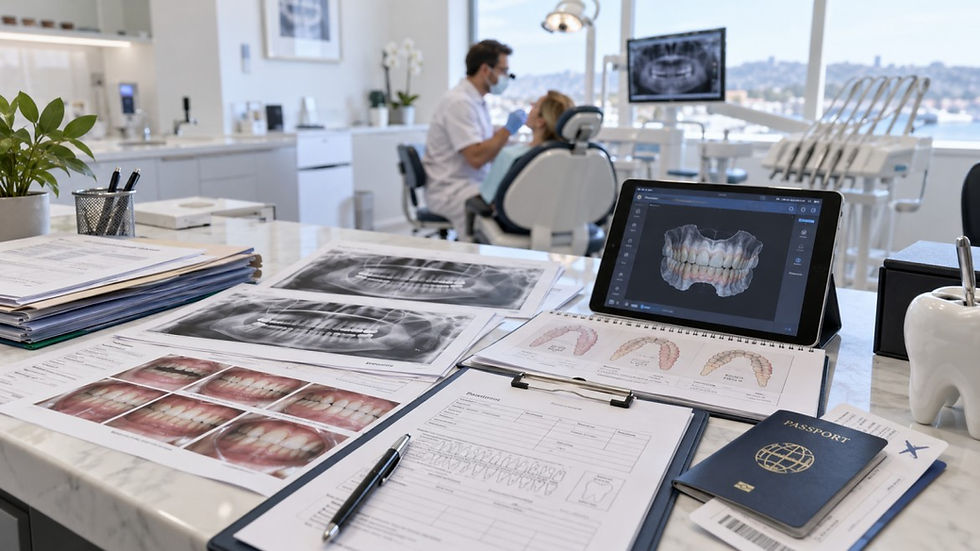
The amount of bone loss cannot be reliably determined simply by looking inside the mouth. The gums may make a ridge appear larger than the underlying bone actually is. For this reason, patients considering Dental Implants with Bone Loss usually require appropriate diagnostic imaging.
Clinical examination and three-dimensional imaging such as CBCT can help the dental team evaluate:
Available bone height and width
Bone density and quality
Location of nerves and sinus cavities
Shape of the remaining jawbone
Condition of surrounding teeth and gums
Presence of infection
Space available for the final restoration
Potential implant positions and angles
This diagnostic stage allows the treatment team to decide whether implants can be placed directly or whether the site should first be prepared with an additional procedure.
Treatment Options for Dental Implants with Bone Loss
There is no single treatment used for every patient with reduced jawbone volume. The goal is to choose the least invasive approach that can still provide adequate support and allow the implants to be positioned correctly.
The main options include bone grafting, sinus lift procedures, shorter or narrower implants in selected situations, and strategic full-arch implant placement.
Treatment Option | When It May Be Considered | Main Purpose |
Bone grafting | Insufficient width or height at the implant site | Rebuild missing bone |
Sinus lift | Reduced bone height in the upper back jaw | Increase bone beneath the sinus |
Short implants | Selected cases with limited vertical bone | Reduce the need for extensive augmentation |
Narrow implants | Selected cases with limited ridge width | Fit an appropriate implant into narrower anatomy |
Strategic/angled implants | Certain full-arch cases | Use stronger areas of remaining bone |
All-on-4 or similar full-arch treatment | Extensive tooth loss with suitable remaining bone | Support a fixed full-arch restoration |
Bone Grafting
Bone grafting is one of the most frequently used approaches for Dental Implants with Bone Loss. The purpose of the procedure is to rebuild or increase bone volume in the area where the implant needs to be placed.
The graft material provides a framework that supports new bone formation during healing. The exact technique varies depending on the size and location of the defect.
A relatively small deficiency may sometimes be grafted at the same appointment as implant placement. Larger defects may require a separate grafting procedure followed by several months of healing before implants are placed.
The important point is that needing a bone graft does not necessarily mean that implant treatment has failed before it begins. Bone augmentation is a planned part of implant therapy for many patients and can help create a more favorable foundation for the final restoration.
Sinus Lift
A sinus lift is mainly used when there is insufficient bone height in the posterior upper jaw.
After upper back teeth are lost, the bone beneath the maxillary sinus can become thinner. In some patients, the available height may not be sufficient for an implant to be positioned safely.
During a sinus augmentation procedure, the sinus membrane is carefully elevated and graft material is placed to increase the available bone in the area. Depending on the amount of existing bone and the treatment plan, implants may sometimes be placed during the same procedure or at a later stage after healing.
Not every patient with missing upper teeth needs a sinus lift. The decision depends on the amount of residual bone and the implant dimensions and position required.
Short or Narrow Dental Implants
In selected cases, short or narrow implants may provide another option.
Short implants can sometimes be used where vertical bone height is limited, potentially reducing the need for a more extensive grafting procedure. Current research supports their use in appropriately selected patients, although long-term outcomes depend on several clinical and prosthetic factors.
Narrow implants may also be considered when ridge width is limited, but they are not appropriate simply because the bone is thin. Implant diameter must still be compatible with the location of the tooth, the expected chewing forces, and the type of restoration.
The dentist should therefore decide whether a smaller implant is appropriate based on the complete clinical situation rather than using it only as a way to avoid grafting.
All-on-4 and Strategic Implant Placement
Patients with extensive tooth loss may sometimes have enough useful bone in certain parts of the jaw even when other areas have experienced significant resorption.
Full-arch approaches such as All-on-4 use strategically positioned implants to support a complete fixed restoration. In appropriate cases, posterior implants can be angled to make better use of available bone while avoiding some anatomical limitations.
This can sometimes reduce the extent of bone grafting required, which is one reason All-on-4 is frequently discussed in connection with Dental Implants with Bone Loss.
However, All-on-4 is not a universal solution for severe bone loss. Patients still need enough bone in suitable areas to provide adequate implant stability. In some cases, grafting or another full-mouth rehabilitation approach may still be necessary.
How Long Does Treatment Take When Bone Loss Is Present?
The treatment timeline for Dental Implants with Bone Loss depends primarily on whether additional bone procedures are required.
A patient with mild bone loss who can receive an implant directly may follow a timeline similar to a conventional implant case. A patient requiring major bone reconstruction may have a longer treatment process because the grafted area needs time to develop sufficient bone before implant placement.
Assessment and Treatment Planning
The first stage involves examination and diagnostic imaging. The dental team evaluates the remaining teeth, gums, jawbone, bite, and planned restoration.
At this stage, the dentist determines whether the patient has enough bone for direct implant placement or whether another procedure should be performed first.
Bone Preparation When Necessary
If augmentation is required, bone grafting or sinus lifting may be performed. Smaller grafts can sometimes be combined with implant placement, whereas larger reconstructions are often completed as a separate stage.
Healing periods vary according to the procedure, graft size, location, and individual response.
Implant Placement and Osseointegration
After the area is suitable, the dental implants are placed. The surrounding bone then needs time to integrate with the implant surface.
This biological healing period should not be confused with how quickly the patient feels comfortable after surgery. Post-operative swelling and discomfort may improve relatively quickly, while osseointegration continues for considerably longer.
Final Restoration
Once the dentist confirms that the implants are stable and healing is complete, the definitive crown, bridge, or full-arch restoration can be designed and fitted.
Patients should therefore avoid comparing their treatment timeline with another person's implant experience. Dental Implants with Bone Loss may involve anything from relatively straightforward placement to a multi-stage reconstruction, and the safest timeline is based on the individual clinical situation.
What Determines the Success of Dental Implants with Bone Loss?
Having enough bone is important, but it is only one part of successful implant treatment. Long-term outcomes also depend on the health of the gums, implant positioning, prosthetic design, bite forces, healing conditions, and maintenance after treatment.
Patients can also support the long-term success of Dental Implants with Bone Loss by following several important principles:
Maintain effective daily oral hygiene
Follow post-operative instructions carefully
Attend recommended follow-up examinations
Treat gum disease before implant surgery
Discuss smoking with the dental team
Report persistent pain, swelling, or implant mobility
Use temporary restorations according to instructions
Maintain the implant-supported restoration after treatment
A carefully performed graft or implant procedure is only the beginning. Dental implants require long-term care just like natural teeth. Regular maintenance helps the dental team identify inflammation, prosthetic problems, or changes around the implants before they become more serious.
Conclusion: Is Bone Loss a Barrier to Dental Implants?
Bone loss can make implant treatment more complex, but it does not automatically mean that dental implants are impossible. Many patients who have lost jawbone after missing teeth, periodontal disease, or long-term denture use may still have several treatment options.
If you are considering Dental Implants with Bone Loss, the most important first step is a professional examination with appropriate imaging. A carefully planned approach can help identify whether implants are possible, what preparation may be needed, and which treatment path is most suitable for your long-term oral health. At Alo Dr, international patients can explore personalized dental implant solutions in Tbilisi, including treatment planning for cases involving bone loss, bone grafting, sinus lift procedures, and full-arch rehabilitation.
You can also request an online consultation to share your dental records and receive an initial assessment before travelling to Georgia.
Frequently Asked Questions About Dental Implants with Bone Loss
Can you get dental implants with severe bone loss?
Severe bone loss does not automatically rule out implant treatment, but it usually makes planning more complex. Depending on the location and extent of the deficiency, treatment may involve bone grafting, sinus augmentation, strategic implant positioning, or a full-arch approach. In advanced cases, treatment may need to be completed in several stages.
How do I know if I have enough bone for dental implants?
The most reliable way to determine bone availability is through a professional dental examination and appropriate imaging. Three-dimensional CBCT imaging can help evaluate bone height, width, shape, and nearby anatomical structures. A visual examination alone usually cannot provide enough information for final implant planning.
Does bone grafting make dental implant treatment take longer?
It can. Small grafts may sometimes be completed at the same time as implant placement, while larger grafts usually require a healing period before the implants can be inserted. The overall timeline depends on the type of graft, the amount of bone required, implant stability, and the patient's healing response.


Comments