
7 Symptoms That Could Mean You Need a Root Canal

Tooth pain can sometimes be more than a minor dental problem. When tooth decay, trauma, or bacterial infection reaches the inner part of a tooth, known as the dental pulp, it may cause inflammation or infection that requires root canal treatment. Recognizing the warning signs early can help prevent further damage and protect your natural tooth.
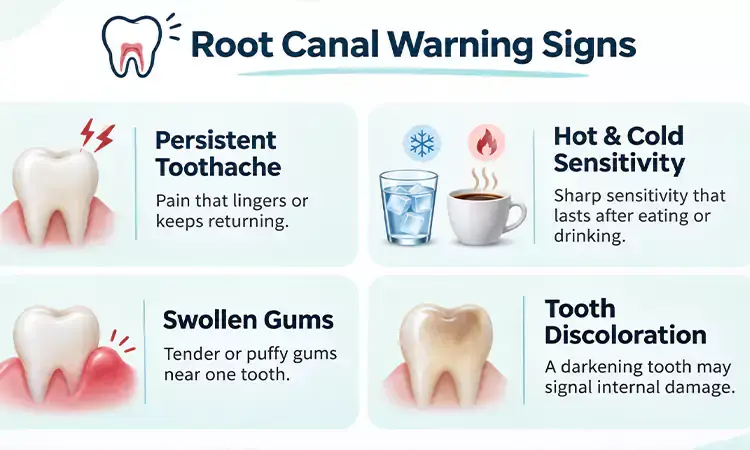
Understanding the common Root Canal Symptoms can help you identify when something is wrong. Persistent toothaches, prolonged sensitivity to hot and cold, swollen gums, and pain when chewing are among the signs that may indicate damage to the dental pulp.
In this article, we explore seven common Root Canal Symptoms, explain what causes them, and discuss when you should seek professional dental care.
1. Persistent or Severe Toothache
One of the most common Root Canal Symptoms is a toothache that does not go away. The pain may be constant or come and go throughout the day. Some people experience a sharp, throbbing sensation, while others describe a deep ache inside the tooth.
This type of pain may occur when the dental pulp becomes inflamed or infected. It can become more noticeable when chewing, biting, or applying pressure to the affected tooth.
A persistent toothache does not automatically mean you need a root canal. However, if the pain continues, becomes more intense, or occurs without an obvious trigger, a dental examination is important to identify the underlying cause.
2. Prolonged Sensitivity to Hot and Cold
Brief discomfort after drinking something cold or eating hot food is relatively common. However, sensitivity that continues long after the hot or cold stimulus has been removed may be one of the important Root Canal Symptoms to watch for.
You may notice:
Sharp pain after drinking cold water.
Discomfort that lasts for several seconds or minutes.
Pain when consuming hot drinks or foods.
Sensitivity that gradually becomes more intense.
Prolonged temperature sensitivity can indicate irritation or inflammation of the dental pulp. A dentist can determine whether the pulp is capable of healing or whether root canal treatment may be necessary.
3. Pain When Biting or Chewing
If you feel pain when biting down or chewing food, it may indicate a problem inside the tooth or in the surrounding tissues.
Pain during chewing is another one of the Root Canal Symptoms that deserves attention, particularly when it occurs alongside swelling, prolonged sensitivity, or spontaneous toothache.
Possible causes include:
Inflammation around the root of the tooth.
Infection affecting the tissues surrounding the tooth.
Deep tooth decay.
A cracked or damaged tooth.
Because several dental conditions can cause similar discomfort, a dentist may need to examine the tooth and take dental X-rays before recommending treatment.
4. Swollen or Tender Gums Near a Tooth
Swelling around a particular tooth can sometimes indicate an infection that has spread beyond the dental pulp.
The affected gum area may look red, feel tender, or become painful when touched. In some cases, a small pimple-like bump may appear on the gum. This can be a sign of a dental abscess, which requires prompt professional evaluation.
Among the possible Root Canal Symptoms, gum swelling is particularly important because it may suggest that the infection has affected the tissues around the tooth.
Do not attempt to squeeze or drain a swollen area yourself. A dental abscess requires appropriate professional treatment and should not be ignored.
you can also read about How to Compare Dental Clinics Abroad: A Patient Safety Checklist
5. Tooth Discoloration
A tooth that gradually becomes darker than the surrounding teeth may have experienced internal damage.
Discoloration can occur when the dental pulp is damaged or when the tooth has suffered trauma. In some cases, the tooth may develop a grayish, brownish, or yellowish appearance.
Although tooth discoloration has several possible causes, it can be one of the Root Canal Symptoms, especially when accompanied by pain or a history of dental injury.
A dentist should evaluate the tooth to determine whether the pulp is healthy and whether treatment is needed.
you can also read about Tooth Decay: Causes, Stages, Symptoms, and Prevention Guide
6. A Dental Abscess or Pus Around the Tooth
A dental abscess is a pocket of pus caused by a bacterial infection. It can develop near the root of a tooth when bacteria enter the pulp through deep decay, cracks, or dental injuries.
Common warning signs include:
A painful, swollen area near the affected tooth.
Pus or an unpleasant taste in the mouth.
Persistent throbbing pain.
Swelling in the face or jaw.
Fever in some cases.
These are serious Root Canal Symptoms that require prompt dental assessment because an untreated infection can spread to surrounding tissues.
A root canal may be recommended to remove infected pulp and preserve the natural tooth. However, the appropriate treatment depends on the extent of the infection and the condition of the tooth.
If you experience facial swelling, fever, or difficulty swallowing or breathing, seek urgent medical or dental care. Difficulty breathing or swallowing requires emergency attention.
you can also read about What Is Tooth Sensitivity? Causes, Symptoms, and Prevention Guide
7. Tooth Pain That Wakes You Up at Night
Tooth pain that becomes severe at night or wakes you from sleep should not be ignored.
Some people notice that the pain becomes more intense when lying down. It may feel like a deep, throbbing sensation that makes it difficult to sleep.
Nighttime tooth pain can have several causes, including advanced tooth decay, pulp inflammation, or an infection around the root.
Among the possible Root Canal Symptoms, spontaneous pain that occurs without eating, drinking, or touching the tooth can be particularly concerning. It is a good reason to arrange a dental examination as soon as possible.
When Should You See a Dentist for Root Canal Symptoms?
Recognizing Root Canal Symptoms is useful, but symptoms alone cannot confirm that a root canal is necessary.
A dentist will usually evaluate the affected tooth by:
Asking about the type, duration, and location of your pain.
Examining the tooth and surrounding gums.
Checking the tooth's response to temperature or other tests.
Taking dental X-rays when needed.
These examinations help determine whether the dental pulp is inflamed, infected, or still healthy enough to recover.
If the pulp is irreversibly damaged or infected, root canal treatment may be recommended. During this procedure, the dentist removes the affected pulp, cleans and disinfects the inside of the tooth, and seals the root canal system. A filling or dental crown may then be needed to restore the tooth's function and strength.
Early diagnosis can help prevent complications and may increase the chance of saving the natural tooth.
Conclusion
Recognizing the warning signs of dental pulp damage can help you seek treatment before the condition becomes more complicated. Persistent toothache, prolonged sensitivity to hot and cold, pain when chewing, swollen gums, tooth discoloration, dental abscesses, and nighttime pain are among the common Root Canal Symptoms that deserve attention.
However, not every toothache or sensitive tooth requires root canal treatment. Only a dental examination can determine whether the pulp is damaged and which treatment is appropriate.
If you notice one or more of these symptoms, do not delay visiting a dentist. Timely diagnosis and proper treatment can help protect your oral health and preserve your natural teeth.
Frequently Asked Questions
1. What are the most common Root Canal Symptoms?
The most common Root Canal Symptoms include persistent toothache, prolonged sensitivity to hot or cold, pain when biting, swollen gums, tooth discoloration, and signs of dental infection. However, some teeth with pulp damage may cause little or no pain.
2. Can I need a root canal without experiencing pain?
Yes. In some cases, the dental pulp may become damaged or die without causing noticeable pain. A dentist may discover the problem during a routine examination or through dental X-rays. This is why regular dental checkups are important, even when you do not have obvious symptoms.
3. How do I know if my tooth needs a root canal or just a filling?
A filling is generally used when tooth decay has not caused irreversible damage to the dental pulp. Root canal treatment may be necessary when the pulp becomes irreversibly inflamed or infected. A dentist can make this distinction through a clinical examination and appropriate diagnostic tests.



Comments